
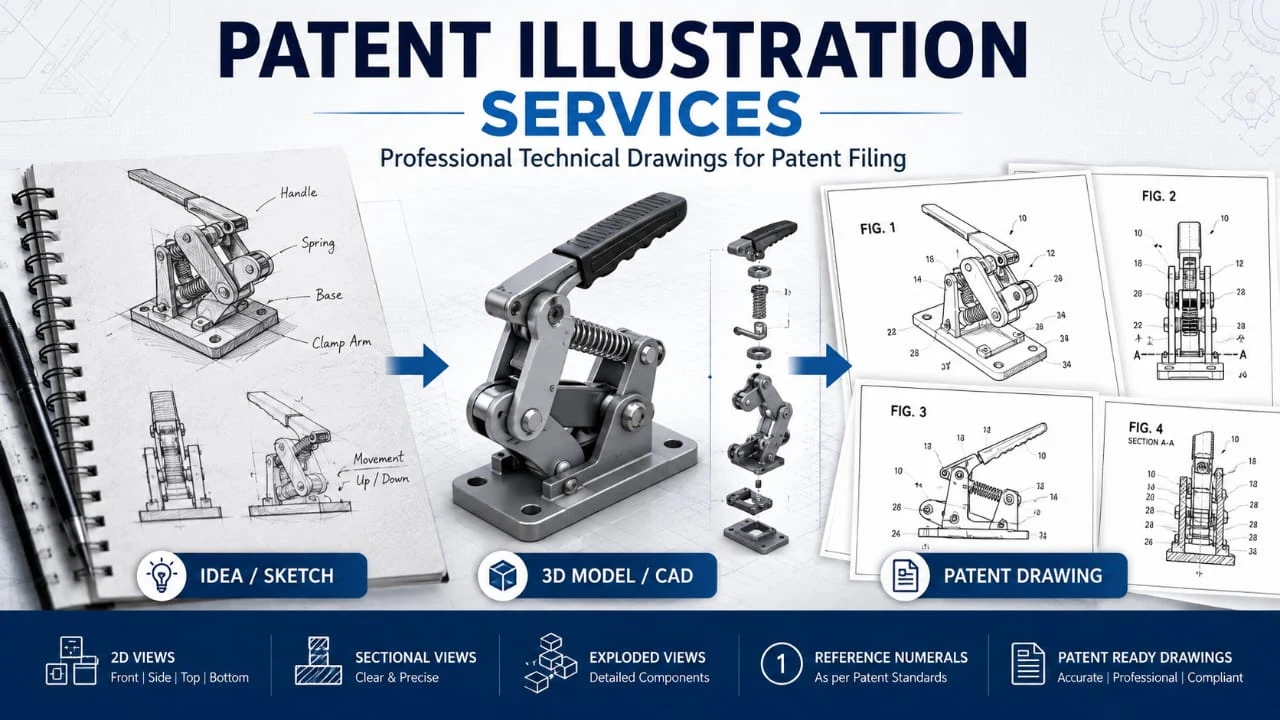
Utility Patent Drawings
Detailed technical illustrations that clearly explain the structure, functionality and operation of an invention, prepared in compliance with patent office standards.
Bring your innovation to life with accurate, publication-ready patent illustrations. Our experienced illustrators create high-quality drawings that comply with the requirements of major patent offices, including USPTO, WIPO, EPO and other international jurisdictions.
Whether you need utility patent drawings, design patent illustrations, flowcharts, CAD conversions or technical diagrams, we deliver precise illustrations tailored to your patent application requirements.
Your satisfaction is our priority. From the initial draft to the final approved illustration, we work closely with you to ensure every detail accurately represents your invention. With rapid response times, unlimited revisions and unwavering attention to quality, we help you move confidently toward successful patent filing.
Professional patent drawings for every innovation, prepared to meet global patent office standards.
Detailed technical illustrations that clearly explain the structure, functionality and operation of an invention, prepared in compliance with patent office standards.
High-quality illustrations highlighting the ornamental appearance, shape and visual features of a product to protect its unique design.
Precise drawings of machines, tools, gears, engines and mechanical assemblies that accurately represent every component.
Professional illustrations for electronic circuits, PCBs, sensors, electrical systems and electronic devices.
Clear and accurate illustrations for surgical instruments, diagnostic equipment, implants, wearable devices and healthcare innovations.
Technical illustrations for laboratory equipment, biological devices, research instruments and life science innovations.
Structured flowcharts, process diagrams, system architectures and UI illustrations for software and digital inventions.
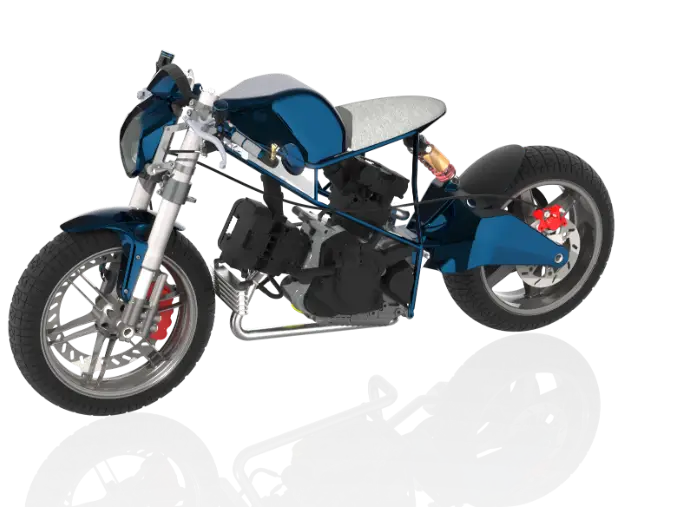
Patent illustrations for vehicle components, electric vehicles, engines, braking systems and transportation technologies.
Detailed illustrations of manufacturing systems, industrial machinery, automation equipment and production tools.
Professional drawings for household products, appliances, sports equipment, toys and everyday consumer innovations.
Technical illustrations for aircraft components, drones, navigation systems, satellites and aerospace technologies.
Illustrations for construction systems, structural components, building technologies and civil engineering innovations.
Patent-ready illustrations for smart devices, IoT systems, communication hardware and connected technologies.
Technical diagrams illustrating chemical processes, manufacturing methods, process flow and industrial systems.
Illustrations for farm machinery, irrigation systems, crop-handling equipment and agri-tech innovations.
Conversion of existing CAD models, 3D files and engineering drawings into compliant patent figures.
We also provide Patent Analytics, Prior Art Searches, Trademark Searches, Filing Support and IP Documentation — with dedicated student and researcher rates.
Complete IP SolutionsWe support innovators at every stage with professional patent illustration and complete intellectual property services — turning innovative ideas into protected intellectual property.
Six commitments we hold to on every project, from a single design figure to a full utility drawing set.
Every illustration is prepared according to your specifications and the standards of the patent office you are filing in.
Need drawings urgently? We offer expedited delivery without compromising on quality.
We keep refining your illustrations until you are completely satisfied — no revision caps, no per-round charges.
Skilled professionals with expertise across engineering, mechanical, electrical, medical, biotechnology, software and industrial design.
Drawings prepared to meet the formatting guidelines of leading patent offices worldwide.
Your invention details are handled with strict confidentiality and data security.
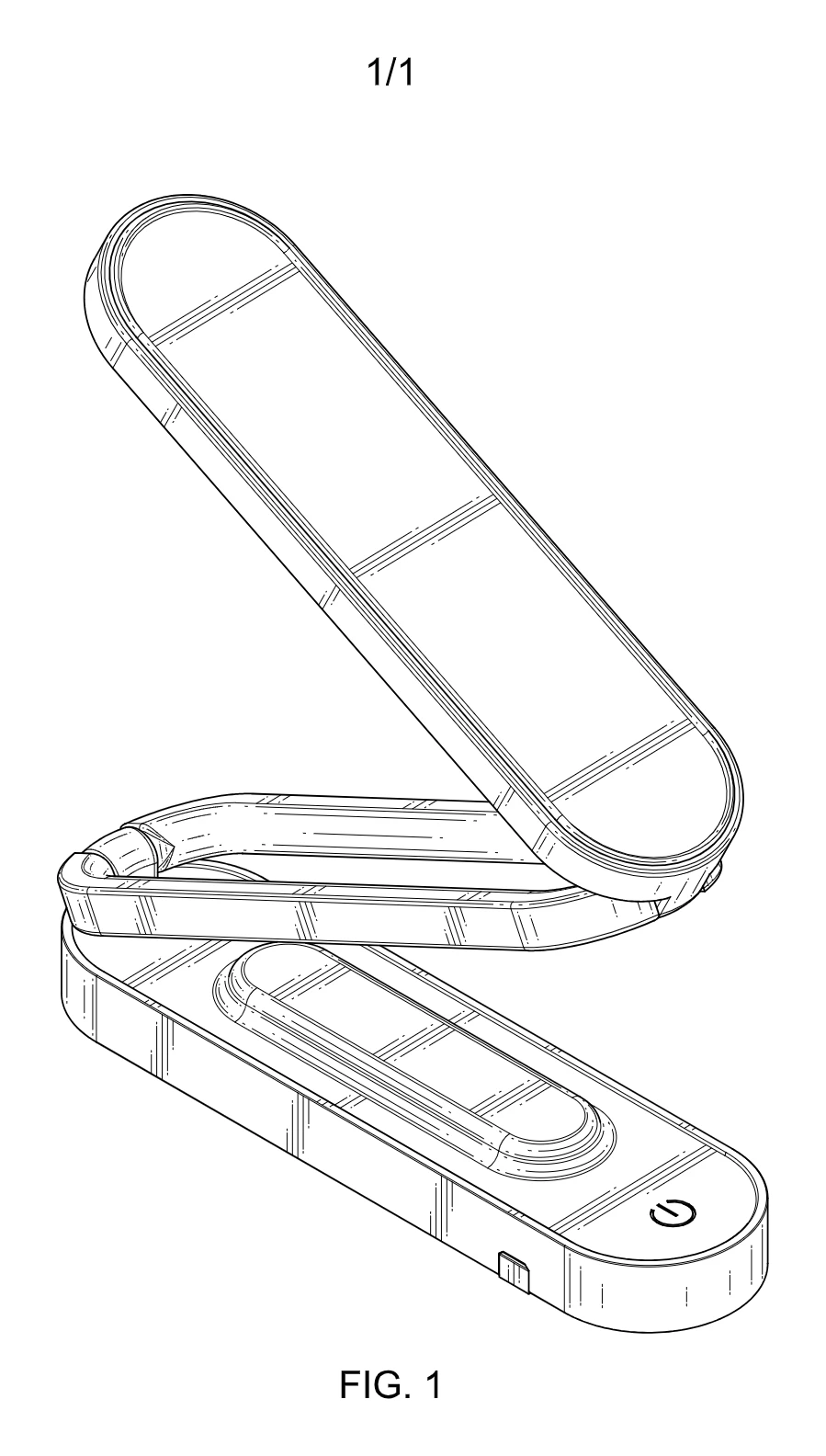
Design, utility, flow diagram and electronic figures drawn to patent office standards. Select any drawing to view it full size, or download it for reference. Samples are shared with client permission only.
Send a sketch, CAD file or photo and we will quote the full figure set.
Unedited feedback from clients we have prepared drawings for.
Karthick and his team did an excellent job creating the mechanical patent drawings for my invention. They followed my instructions carefully, incorporated revisions efficiently, and delivered a clean, precise final drawing package. I would gladly work with them again.
The team follows directions very well, works quickly, and is always respectful and professional. They are easy to communicate with and committed to delivering quality work. An awesome team to work with!
The team was highly responsive, professional, and attentive throughout the project. They understood my requirements clearly and incorporated my feedback promptly. I appreciated their commitment to quality and timely delivery.
Upload a rough sketch, CAD file or photo — any format, up to 25MB. A written quote comes back within one business day.
Beyond patent illustrations, we provide a range of IP support services designed to help students, researchers, universities, and young inventors transform innovative ideas into well-prepared intellectual property. From research and searches to filing support and documentation, we're here at every stage of the innovation journey.
Visual and analytical insights into patent data to help identify technology trends, innovation activity, competitive landscapes and potential opportunities. These services support informed decision-making for research, IP strategy and technology development through clear charts, diagrams and data visualisation.
Helps identify existing patents and published documents related to an invention, providing valuable insights to assess novelty, support patent filing decisions and guide innovation strategies.
Helps identify existing trademarks that may conflict with a proposed brand name, logo or slogan, supporting informed filing decisions and reducing the risk of registration conflicts.
Assists with the preparation and submission of patent applications in accordance with Indian Patent Office requirements, ensuring accurate documentation and a smooth filing process.
Provides professional assistance in preparing, organising and managing technical and intellectual property documents to support patent filing, prosecution and IP management.
Most first inventions never reach a filing for want of guidance rather than merit. Our student and research track runs at reduced rates and assumes no prior IP knowledge.
We run the search with you rather than for you, so you can defend the method in a viva or a project report.
Technical write-ups, disclosure records and publication-grade figures for research projects and dissertations.
Sessions and workshops for departments and IP cells covering what is patentable, what is not, and how filing actually works.
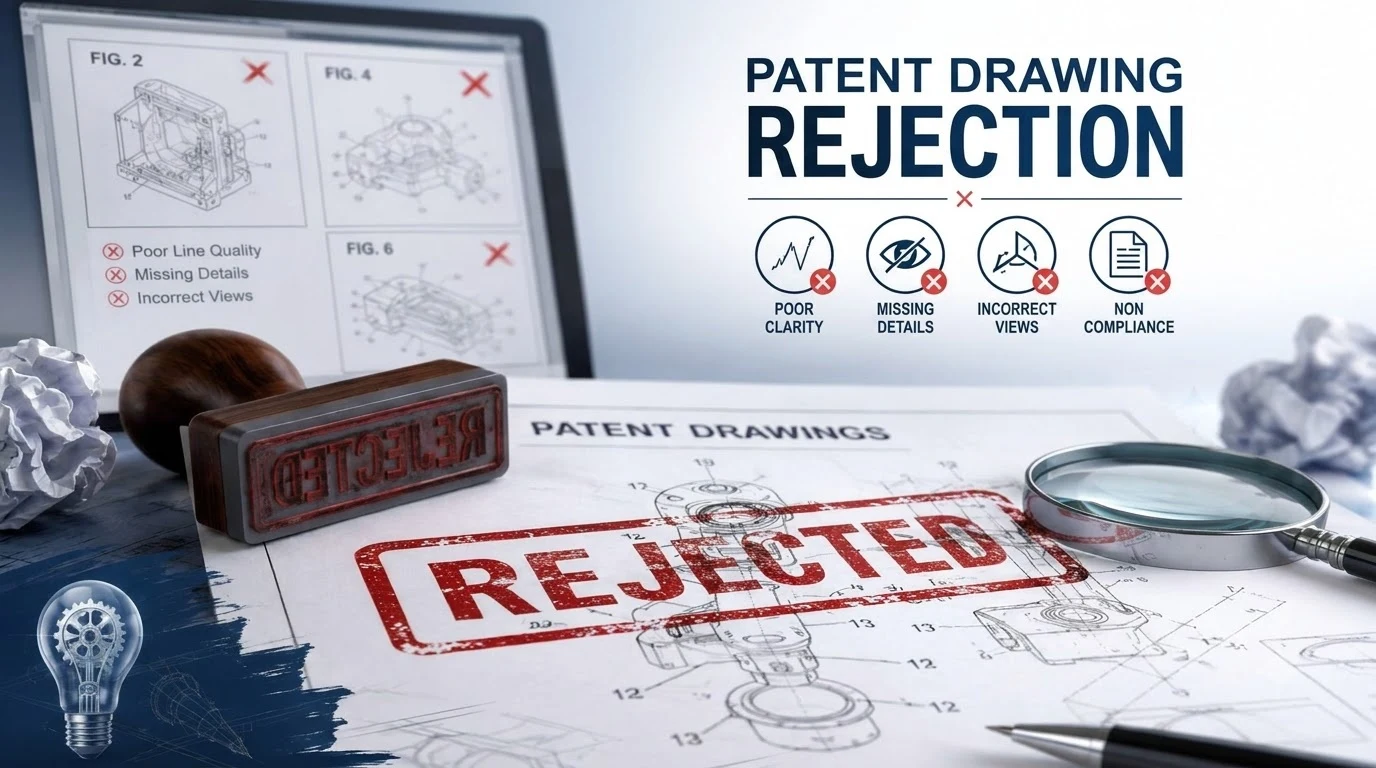
Line weight, shading, reference numerals, margins, view labelling — the objections examiners raise most often are almost always mechanical, and almost always avoidable. A working checklist for the figures you are about to file.
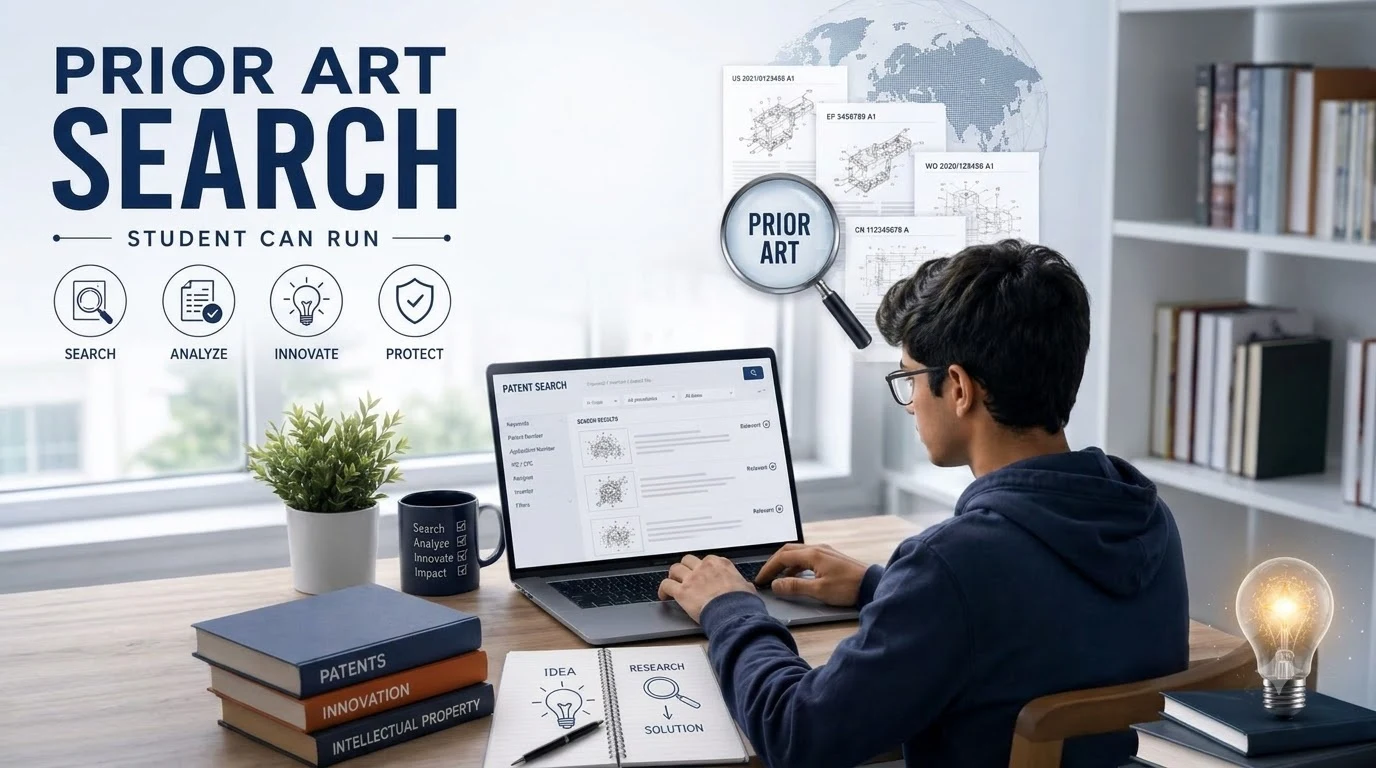
Free databases, sensible keywords and classification codes — how to find out whether your idea is already published before you spend on a filing.
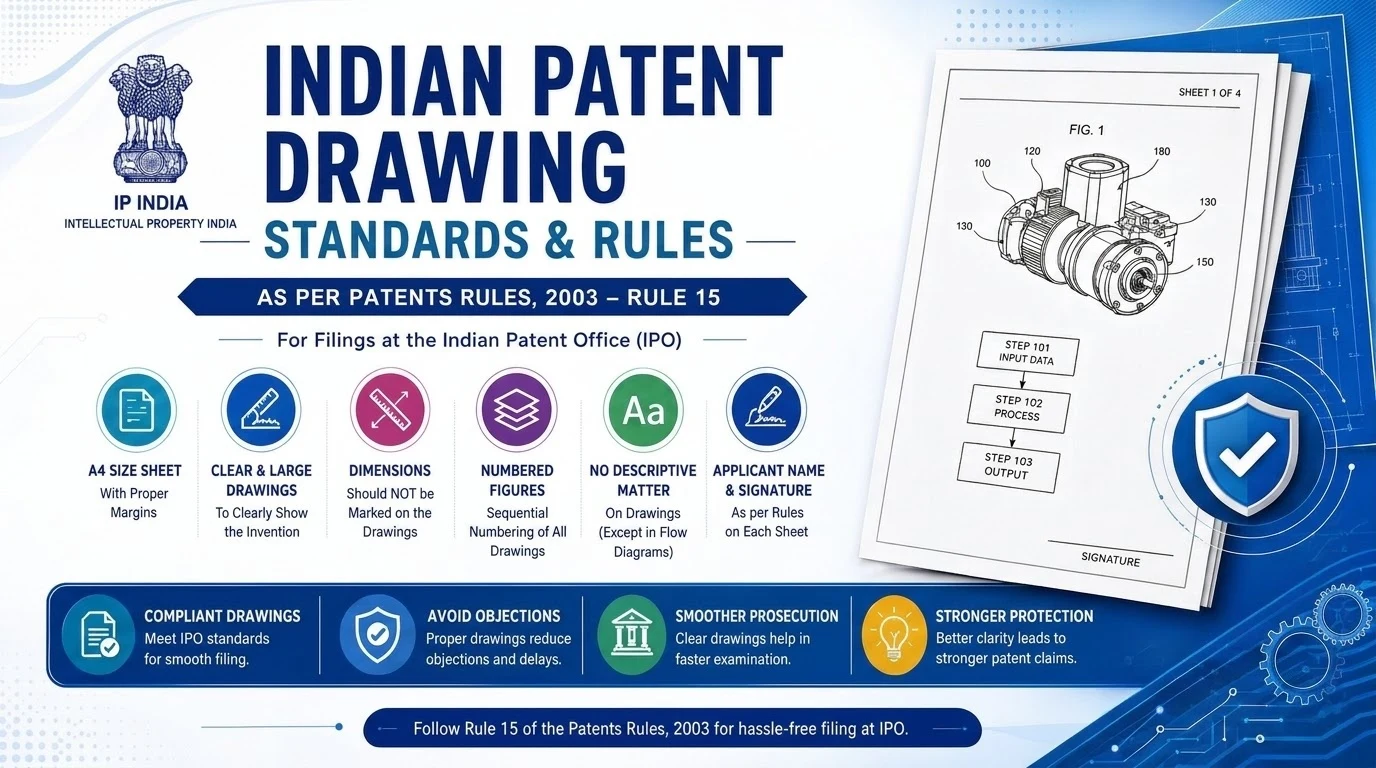
Sheet sizes, margins, numbering and the small formatting rules that decide whether your drawings are accepted on the first submission.
Objections to drawings are rarely about the invention. They are about line weight, numbering and margins — mechanical things, all of which are cheaper to fix before the application is filed than after.
Drawings are reproduced, scanned and printed at reduced size. Lines that look fine on screen close up and turn grey in print. Use solid black lines of uniform weight, keep hatching well spaced, and avoid grey fills and soft gradients entirely. If a feature only reads because of a shadow, it is not drawn — it is rendered.
Shading is permitted where it helps show a surface or contour, but it must be made of clean lines, not tone. The safest test: print the sheet at A4 in black and white and see whether every edge is still legible.
Every numeral in the drawings must appear in the description, and every part named in the description that is shown must carry the same numeral everywhere it appears. Mismatches are the single most common cause of a formal objection, and they multiply when figures are edited late.
Each office sets its own sheet and margin rules, and drawings that spill into the margin are returned regardless of quality. Figures are numbered consecutively — Fig. 1, Fig. 2 — in the order they are first discussed, and a figure split across two sheets must be labelled so the parts read as one drawing.
Do not place a sheet border or a company logo on the drawing. Sheet numbers go in the top margin in the form “2/5”, and nothing else belongs there.
Descriptive text in a figure is generally not allowed. The exceptions are the words a drawing cannot function without — labels in a flowchart, block-diagram box names, and conventional terms such as “water” or “steam” on a schematic. Everything else belongs in the specification.
A drawing set is complete when every claimed feature can be pointed at. If a claim recites an internal channel, a sectional view is required; if it recites an assembly order, an exploded view earns its place. Adding a view later is easy. Adding one after a first examination report is not.
Rules differ between offices and are revised from time to time — always check the current practice for the office you are filing in, or ask us to check it with you.
You cannot clear an invention on a free database in an afternoon. You can find out, in an afternoon, whether someone has already published the obvious version of your idea — and that is usually the question worth answering first.
Before you search, describe what the thing does, what it is made of and what problem it solves — in one sentence, without your project's name in it. Almost every bad search comes from searching a product name instead of a function. “A clamp that holds a bicycle frame during welding” finds prior art. “SmartClamp Pro” finds nothing.
Patent drafters do not use the words you use. For each key element, list the everyday word, the engineering word and the deliberately broad word an attorney would choose: clamp / fixture / retaining member. Search each set, and combine them with the function terms rather than with each other.
Keywords fail because language varies; classification codes do not. Once a single relevant document appears, open it and read its CPC or IPC codes, then browse everything in that subclass. This is the step most first-time searchers skip, and it is the step that turns a scattered keyword list into a real result set.
An abstract tells you what a document is about. Claim 1 tells you what it actually owns. Compare your one-sentence description against claim 1 of each candidate and ask a narrow question: does this claim already cover every element of my idea? If it covers all but one, that missing element may be your invention.
Keep a simple table: database, search string, date, number of results, the documents you kept and why. It takes ten minutes, it stops you repeating searches, and it is the document an attorney or a professor will ask for.
A first pass tells you whether to keep going. It does not replace a professional search before filing — the databases overlap imperfectly, and unpublished applications are invisible for eighteen months.
Drawings filed with an Indian application are judged on form long before they are judged on content. These are the formal points that decide whether a sheet is accepted as filed.
Figures are filed as separate sheets from the specification, on durable A4 paper, drawn on one side only. Nothing else goes on those sheets — no specification text, no claim text, no letterhead.
Leave a clear margin on every side and keep all drawing content inside it. Number the sheets consecutively in the top of the sheet as “sheet number / total sheets”, and number the figures consecutively in the order they are referred to in the description.
Drawings must be in durable, dense, dark, uniformly thick and well-defined lines, capable of clean reproduction. Photographs are not accepted as drawings. Colour is not used. Scale must be large enough that every detail survives a reduction to two-thirds size.
Drawings accompany the application wherever they are necessary to understand the invention — which, for mechanical, electrical and most device inventions, means always. A provisional application may be filed with drawings, and those drawings should already be to standard, because they set the disclosure you can later rely on.
Formal requirements are set out in the Patents Act and Rules and are revised periodically. Confirm the current rule text, or the current practice of the office, before you file.
CROZOIP is a small, hands-on team. Every figure is drawn, checked and delivered by the people named here — nothing is outsourced.
Karthick founded CROZOIP to bring engineering-grade drafting discipline to patent illustration. He leads every project from invention disclosure through to the final figure set, and works directly with attorneys, founders and researchers on the drawings their filings depend on.
John supports innovators, researchers, students, and businesses in IP, technology, and business development, including IPR awareness, patent research, documentation, technical drawings, visualization, and client development. He helps connect innovative ideas with the right technical and business opportunities.
Attach a rough sketch, CAD export, photo or draft specification. We reply with a written quote, figure count and delivery date within one business day.
We have opened your email application with your enquiry already filled in and addressed to info@crozoip.com. Please press send there to reach us — your enquiry has not been submitted until you do.
If nothing opened, email info@crozoip.com or message us on WhatsApp and attach any sketch, CAD file or photo directly.
We reply within one business day with a written quote, figure count and delivery date.
Kind regards,
CROZOIP Services
We appreciate your interest in our Patent Illustration and Intellectual Property support services. Your inquiry has been received and is currently under review.
A member of our team will respond within one business day with the requested information, a quotation, or the next steps, as appropriate.
We look forward to the opportunity to support your IP requirements.
Kind regards,
CROZOIP Services
CROZOIP Services is an intellectual property support studio run by Karthick, working out of Madurai and Chennai. The practice began with engineering drawings and grew into the full set of work an application needs: illustrations, searches, analytics, filing support and documentation.
Every figure is drawn by hand on top of what you send us — a sketch, a CAD file, a photograph — and checked against the formatting rules of the office you are filing in. Nothing is auto-traced and nothing is outsourced.
Alongside professional work we run IPR awareness and low-cost support for students and professors, because most first inventions never reach a filing for want of guidance rather than merit.
Work is undertaken on the basis of the written quotation issued in response to your enquiry. The quotation states the number of figures, the file formats to be delivered and the delivery date. Anything outside that description is treated as new work and re-quoted.
Each project includes two rounds of revision on the delivered figures. Further rounds, or changes arising from a revised invention disclosure, are chargeable at the rate stated in the quotation.
On receipt of full payment, ownership of the delivered drawings passes to the client. CROZOIP retains no rights over your invention or disclosure, and treats all material received as confidential.
Payment terms are stated in the quotation. Final files are released once payment is confirmed.
Projects cancelled before drafting begins are refunded in full. Projects cancelled during drafting are charged in proportion to the work completed.
CROZOIP provides drawing, search and documentation support. It does not provide legal advice, and does not guarantee the grant of any patent, trademark or other right.
Questions about these terms: info@crozoip.com.
When you submit an enquiry we collect your name, phone number, email address, the service you selected, your project description and any file you upload.
Solely to prepare a quotation and to carry out the work you ask for. We do not sell, rent or share enquiry data with third parties.
Invention disclosures, sketches, CAD files and draft specifications are treated as confidential. Access is limited to the people working on your project, and material is not published, reused or shown as sample work without written permission.
Project files are retained while your matter is active and for a reasonable period afterwards for reference. You may request deletion at any time.
Write to info@crozoip.com to access, correct or delete the personal data we hold about you.